
Top 25 Movies of 2025
By: Marc Kozak
2025 Proves That Movies are Still Alive and Kicking

If you would have asked me in September if I thought 2025 was a good year for movies, I probably would have said no. There were few real standouts in the first quarter of the year, and the summer blockbuster season came and went without much of note (apologies in advance to fans of Superman and The Fantastic Four). And yet, from September to the end of the year, there were so many good-to-great movies coming out that I could hardly keep up with them.
Looking at this list (and considering several movies I left out that you could make a decent case for), it's hard to call 2025 anything other than a very good year for the medium. There wasn't anything quite like the cultural phenomenon of 2023's Barbenheimer, but movies like Sinners, Weapons, or even One Battle After Another dominated water cooler and online conversations in a way that made movies feel vital and exciting.
2025 also saw the continued rise in popularity of box office speculation and "analysis," which seems to have become almost a fantasy-football-level sport in some circles. I can't say I understand this, as it's just not something I really care about as someone with no real financial skin in the game, but it's another movie-related trend that hopefully, at the very least, drums up interest in movies with the younger generation and maybe even encourages people to head to the theater and check something out.
There are good reasons to be concerned about the future of movies — the ongoing battle between Netflix and Paramount to acquire control of Warner Bros. is just the latest in a long line of worrying industry consolidation — but people are always going to want to make and consume long-form visual storytelling. There's a good chance you're looking at this list and thinking that you haven't even heard of a lot of these movies. And even a freak like me, who watches hundreds and hundreds of movies a year, is still blissfully unaware of countless unique and thought-provoking movies that came out in the calendar year of 2025. There's so much out there to discover, especially if you look outside of the mainstream algorithm. My foolish hope is that someone likes the sound of something on this list, maybe something they would never have given a chance before, and gets turned on to a whole different world of movie watching. Take a chance on something that sounds weird — you just might like it.
And with that, here are The Filmologist's top 25 movies of 2025. If you are reading this list or have ever read anything on this site — thank you, sincerely.
#25
Caught Stealing
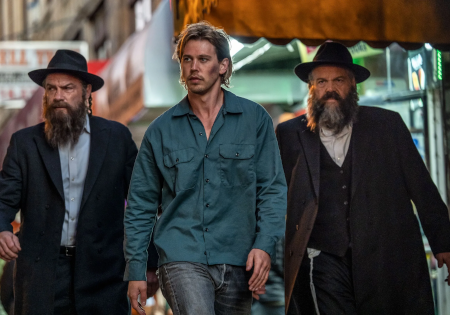
Darren Aronofsky may not quite be a household name, but most people can vividly recall his work. Tell someone he's the guy who made Black Swan and Requiem for a Dream and you'll get the same reaction — a haunted stare, a slow exhale, and a comment somewhere along the lines of "that was so fucked up."
So it comes as a bit of a surprise that Aronofsky's latest, Caught Stealing, is more or less a standard, '90s-style crime thriller that's actually pretty fun, which is not at all a word I would use to describe any of the director's past work. Instead of heavy themes and metaphorical storytelling, we get a thematically thin caper that is more interested in lovingly capturing the energy of a particular era, a pre-9/11 New York City full of grungy characters and vibrant nightlife. It's certainly an homage to the early work of Martin Scorsese (particularly After Hours, as almost every critic on Earth has reveled in naming) but feels a lot more like the spiritual successor to Guy Ritchie's early gangster movies, with wise-talking tough guys gleefully chasing each other through an urban criminal underworld.
#24
The Ballad of Wallis Island
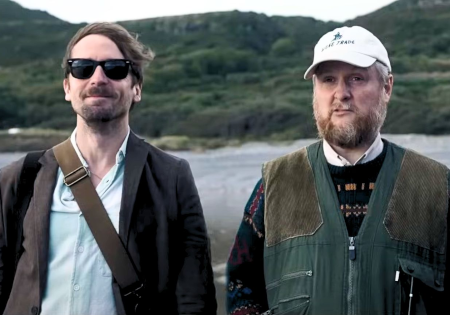
Sometimes you just need a straightforward, feel-good movie that isn't doing anything too complicated, content to make you laugh and maybe even shed a few tears. The Ballad of Wallis Island is exactly that, an adorable and comforting movie about a wealthy fan (Tim Key) who tricks a formerly famous folk duo into reuniting and performing exclusively for him on a remote Welsh island. Tom Basden and Carey Mulligan share an easy chemistry as two musicians who split up long ago but clearly have a romantic and creative spark when they're around each other, even if they drive each other crazy.
Tim Key is delightfully charming and very silly as an eccentric man living a strange but quiet life on an island, motivated entirely by his love for the duo's music and the hope that he can somehow repair whatever it was that split them up. It's a classically heartwarming tale about growing up, moving on, and the pain that comes with never being able to relive better times in the past. If you're looking for a warm hug in movie form, give this one a shot.
#23
The Phoenician Scheme

We, as a society at large, continue to take Wes Anderson for granted. His detractors have gotten louder over the years, claiming that his recent work is just a tiring repeat of the same movie he's been making for years. "He's just a parody of his past work now," is one of the many nonsensical phrases you'll encounter when reading reactions to anything post-The Grand Budapest Hotel, along with "there's no emotion behind anything" and "everything is just symmetrical pastels."
But then again, so it goes: for all of his critics, he has even more fans, and I am certainly one of them. The Phoenician Scheme, while maybe not amongst the director's very best, is still a wildly entertaining romp and a visual smorgasbord of beautiful sets and colorful gags. Anderson once again assembles a pantheon of talent (this time including Benicio del Toro, Michael Cera, Riz Ahmed, Tom Hanks, Bryan Cranston, Scarlett Johansson and Benedict Cumberbatch, just to name a few) and gives them all their moment to be delightfully weird, often bouncing off each other in truly hilarious ways.
Read the full review of The Phoenician Scheme on The Filmologist.
#22
Black Bag
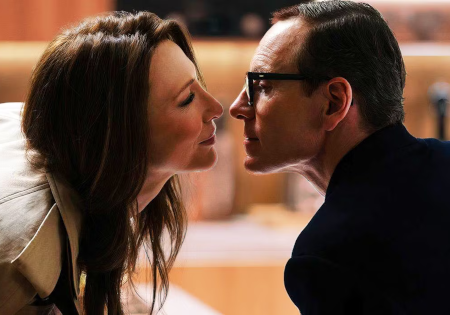
No one is knocking Steven Soderbergh's incredible work ethic — he's released 10 movies since 2017 with another one on the way in 2026 — but some have started to question if the legendary filmmaker has lost the touch that produced classics like Traffic or the Ocean's Trilogy. Black Bag isn't necessarily anything we haven't seen before, but it crackles with an energy that has been missing from Soderbergh's output of late.
Bolstered by excellent performances from Cate Blanchett and Michael Fassbender, Black Bag is a sexy and smart spy thriller for adults, featuring all of the snazzy outfits, stylish locations, and snappy dialogue that you'd expect from such a movie. Soderbergh and screenwriter David Koepp manage to skillfully cram plenty of thrills into scenes that are nothing more than people sitting in a room and chatting, including two standout scenes — one at a dinner party and another during a polygraph test — that will have you leaning forward in your chair. It's a tight, straightforward tale told with masterful precision by people who really know what they're doing.
#21
28 Years Later
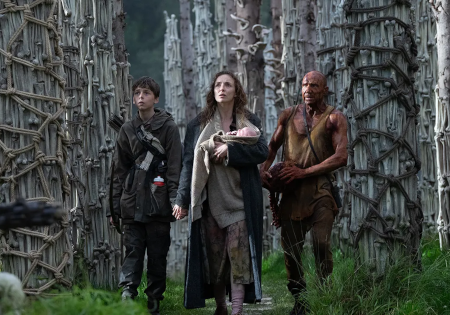
The best post-apocalyptic movies serve to remind us how fragile our society really is. 28 Days Later (2002) has withstood the test of time, not just because of cracking zombie action scenes, but because it effectively highlights how quickly everything can go away and how difficult it is to overcome our self-serving inclinations even in the face of certain doom.
If 28 Days Later was a desperate quest just to survive this doom, then 28 Years Later is about the different ways in which the survivors accept its inevitability. Thankfully, the movie isn't really interested in reliving the blood-soaked carnage of the original, choosing instead to thoughtfully explore a post-post-apocalyptic society adapting to evolved definitions of life and death. It's perhaps a slightly surprising track for returning director Danny Boyle and screenwriter Alex Garland to take (and maybe a disappointing one for those expecting a bigger and better version of the original), but it's a highly effective and oddly touching piece of work that aims for the heart rather than the lizard brain.
#20
Weapons
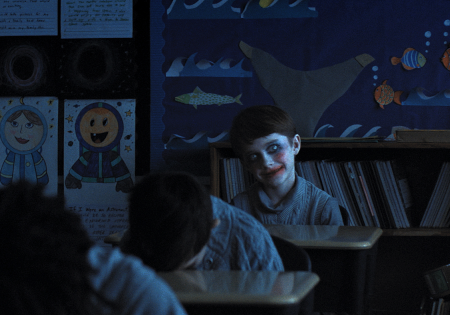
Mainstream horror movies have been stuck in a bit of a rut for the past several years, as the genre has leaned heavily on stylish, self-serious explorations of trauma and grief. Most of these have long since started to blend together, but thankfully, a few exciting young directors have started to shift things in a different direction. Recent movies like the Philippou brothers' Talk to Me, Osgood Perkins' The Monkey, and Zach Cregger's Barbarian have dealt with the same serious themes but inserted a sense of fun and playfulness, inviting the viewer to leave the theater laughing instead of harboring an existential crisis. It's a seemingly small but refreshing change, and one that allows these movies to be heartily recommended to a much wider audience.
Cregger's latest project, Weapons, might be the easiest of them all to recommend, as it's a deliriously fun thrill ride full of unpredictable twists, gleefully spectacular violence, and genuinely laugh-out-loud moments. What starts as an intriguing mystery about missing children eventually morphs into something else entirely, utilizing an effective screenwriting trick that breaks the movie into chapters that follow different characters as their paths crisscross over the same time period. It all ends in a profoundly satisfying final act of complete chaos that is almost guaranteed to have you cackling and yelling at the screen. In short, this is tremendous entertainment.
#19
Blue Moon
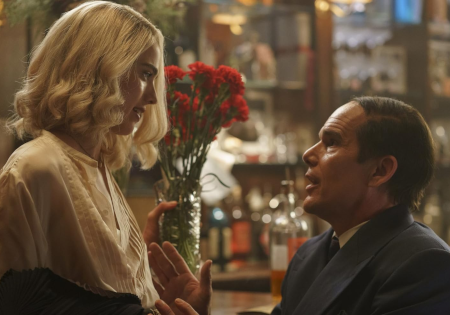
You probably don't know who Lorenz Hart is, but you might be familiar with his work. As half of the Broadway songwriting team Rodgers and Hart, he was responsible for writing the lyrics for classic musical numbers like "The Lady Is a Tramp," "Manhattan," My Funny Valentine," and of course, "Blue Moon." Director Richard Linklater sets the entire movie in a bar on the night of the 1943 premiere of Oklahoma!, the famous musical that was Rodgers' first work without Hart and the birth of the legendary musical duo of Rodgers and Hammerstein.
Ethan Hawke gives a career-best performance as Hart, a motormouth of a man who always has something to say about everything, clearly a man of intelligence, but also one with a serious alcohol addiction and a pathetic infatuation with a 20-year-old art student (Margaret Qualley). Hawke talks for about 90 minutes straight, alternately entertaining and annoying his fellow bar patrons as he grapples with his bitterness and jealousy over the instant success of a play he wasn't involved in. He's also determined to attract the attention of a young woman who likely only gave him the time of day in order to advance her own career ambitions. It's a fascinating study of the ego and frailty of an artist who was desperate to be loved but constantly got in his own way. I could've watched Hawke chew scenery as Hart for hours.
#18
Resurrection
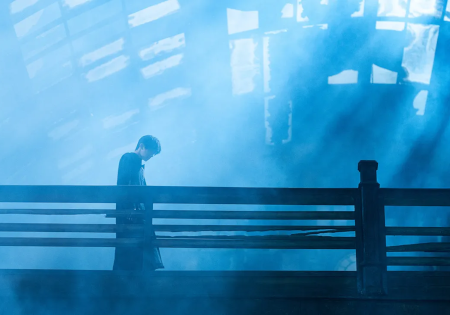
Critics love to say that a director who makes a movie with clear influences has written their "love letter to cinema," but very few (if any) movies go to the lengths that Bi Gan goes to in Resurrection to celebrate the history of film. This epic and often confounding sci-fi saga is set in a future where most of humanity has lost the capacity to dream. A police officer of sorts discovers that one inhuman creature (Jackson Yee) is still able to experience them and enters his dreams to see if they hold any truths.
But really, the main goal of the movie is to celebrate the many types of filmmaking that have existed over the past 100 years. Split into six different sections, each corresponding to one of the six senses recognized in Buddhist thought, every part uses a completely different style. For example, the first section is presented like a classic silent film, complete with old-timey music and title cards. Other sections feature absolutely astonishing visuals, colors, and images that defy any kind of earthly logic. The movie culminates in a 30-minute long take, further cementing the 35-year-old filmmaker as one of the most creative and ambitious directors in the world, doing more with a small budget than others have done with hundreds of millions of dollars. Some may find the overall narrative a bit impenetrable, but it's hard not to be awed at a big swing of this magnitude.
#17
The Mastermind
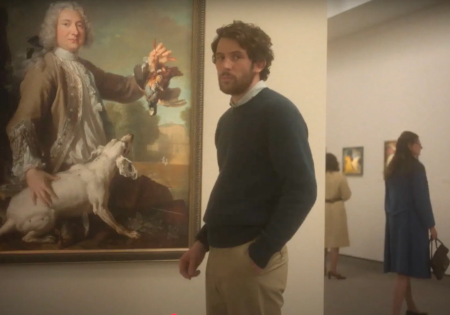
Kelly Reichardt (Meek's Cutoff, First Cow) continues to be one of the best filmmakers in the world that I would struggle to recommend to anyone else. Her films are so slow and anti-cinematic that I could hardly blame anyone for being bored out of their mind. That being said, she is so meticulous and precise in the themes she decides to explore that her movies often end up lingering in my mind for a long time afterwards.
Her latest work is a kind of anti-heist movie about a struggling family man (Josh O'Connor) who forms a crackpot plan to steal art from a sleepy suburban museum while the rest of the nation rages over the Vietnam War. The allure of an exciting heist is a bit of a feint; this is very much a hyper-focused character study of a man who believes he deserves better than the already-privileged life he leads, because, well, he's a middle-class white guy. His privilege is such that all of the horrible things going on the world are just background noise on a television set whose sound just forever bounces off of him.
It's not the most exciting summary and the story is extremely simple at its heart (as all Reichardt movies are) but there's so much richness and detail to get out of it if you're willing to be patient and watch with close attentiveness. Reichardt is never going to make gonzo box office, but there's a reason that all of your favorite filmmakers cite her as one of the best in the game right now.
#16
Sound of Falling
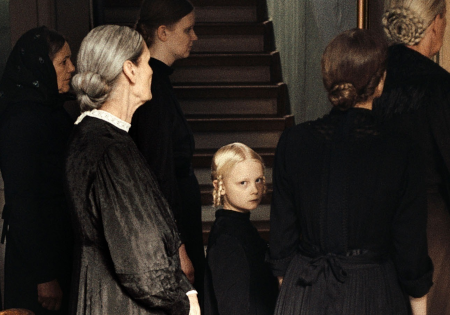
Even though it's not based on any book, Sound of Falling certainly feels like one of those huge, multi-generational novels that follows various members of a family while trauma and suffering infect the family tree like some kind of virus. And just like those kinds of novels, it's long, messy, somewhat confusing, and it can take a few seconds to figure out what time period you're in. That being said, I love novels like that, which means I was completely on board for what director Mascha Schilinski was cooking.
The movie follows four girls from different historical periods — from shortly before World War I all the way to the early 21st century — who are connected by the nature of their tragic lives and the almost mundane evil that surrounds them on a daily basis. It's a hard and emotionally taxing story of sisterhood formed mostly by necessity, told in a capital-A Arthouse style that might not appeal to everyone, but those who latch on to Schilinski's unique vision and powerful image-making will likely be left with intense feelings that linger for a long time.
#15
Bugonia
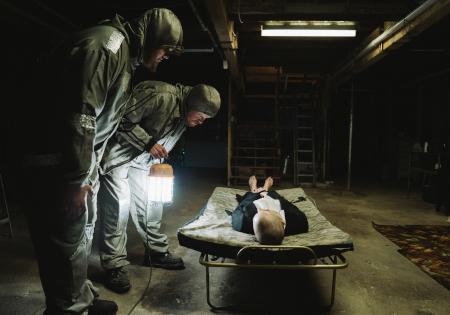
Yorgos Lanthimos is one of a few major directors in 2025 who dared to make a cinematic statement on today's chaotic and divisive modern society, and Bugonia — his fourth collaboration with Emma Stone — is easily the strangest of the lot. Effectively an English-language remake of the 2003 South Korean film Save the Green Planet!, the story follows two frustrated young men who kidnap the CEO of a powerful pharma corporation (Stone), believing that she is an alien that has ruined their lives and is set to destroy the Earth.
It's an effective and entertaining thriller on its surface, but also a clever satire of how easy it is for people (read: young men) to get sucked into an information bubble and create confidently incorrect beliefs that have dangerous effects on those around them. It's Lanthimos' most accessible and most political work to date, all done in the same darkly comic, absurdist style that we've come to expect from the acclaimed director of The Favourite and Poor Things.
#14
No Other Choice
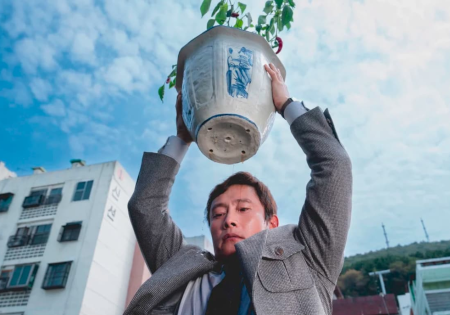
Most Park Chan-wook movies could make it into a list of the year's best based solely on technical merit. The famed director of Oldboy and The Handmaiden is easily one the world's most talented filmmakers, blessed with such style and skill that each of his movies contains several camera moves, editing tricks, or clever compositions that no one else on earth could have conceived of, much less pulled off successfully. No Other Choice is no exception — and on top of all that, it's a banger of a story as well.
Lee Byung-hun stars as a successful veteran paper company employee who is suddenly laid off and faced with no job prospects. In order to maintain the comfortable way of life that he and his family are used to, he decides the only way forward is to eliminate his job-seeking competition. It's a note perfect satire of the current state of our job market and the pressures of "thriving" in a capitalist society. If all of your self-worth is tied up in your socioeconomic status, what are you to do when you can be replaced by automation or upended by a corporate merger at any moment? Park Chan-wook masterfully captures the desperation, anger, and plain ridiculousness of working in our current times, all while making us laugh and providing plenty of surprising twists to keep us entertained.
#13
The Secret Agent
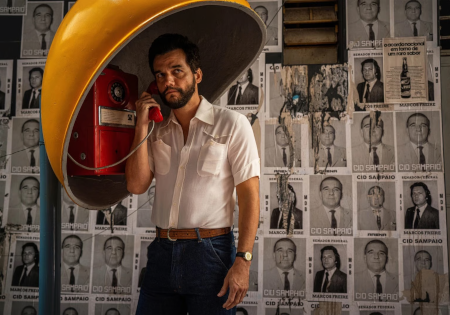
Kleber Mendonça Filho's The Secret Agent is an arthouse political thriller centered around a former professor (Wagner Moura) caught in the political turmoil of the final years of the Brazilian military dictatorship. Filho operates successfully in several different filmmaking modes throughout the nearly three-hour runtime — it's a tense spy movie, a quasi-documentary, a fun B-movie, a loose hangout comedy — but never deviates from its main goal of capturing a time in a country where people could disappear at any moment.
Moura is incredibly engaging as a man constantly on the run, a little confused by why anyone would be after him, being led from one safehouse to the next by a loose group of friends that could barely be called revolutionaries. He is just trying to get by, as are most people living under an oppressive regime, but it's impossible to escape when your neighbor could be a spy or the man reading the newspaper on the corner could be an assassin. Filho is less interested in action, instead concerned with creating a fictional document of the times, complete with time-appropriate costumes and delightfully catchy music. It would all be a lot of fun if it wasn't for the constant danger lurking at every corner, giving the movie a strange, bittersweet feeling, like it's a movie made with both extreme pride and tremendous shame.
#12
Sirāt
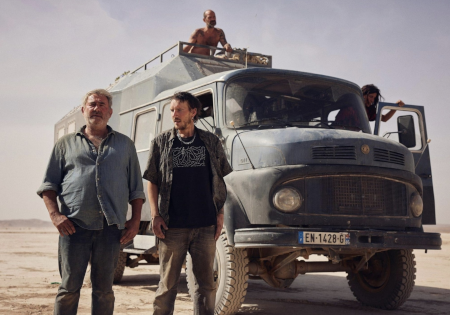
Oliver Laxe's Sirât is a movie that defies easy classification, primarily because it's more interested in images and feelings than any kind of actual story. It's tempting to compare it to Mad Max or Wages of Fear because it features a small group of people making their way through a dangerous desert wasteland in a large vehicle, but the basis for comparison really stops there. If anything, Laxe's fascinatingly esoteric and highly personal piece of work that comes as close as one can get to literalizing a spiritual journey. For further clues, look no further than the movie's title. The Arabic word "sirāt" means "path" or "way"; for the characters in the movie, this pathway consists of the dusty and craggy roads that wind through Morocco’s Atlas Mountains, a hauntingly beautiful but perilously desolate land that holds death and revelation in equal measure.
That all being said, Sirât also works as a thriller that slowly escalates to an almost unbearable level of tension. It's not quite a crowd-pleasing action spectacle, but it does keep you firmly gripped to your seat, marveling at the memorable images and vibrating along with the movie's pulsing techno beat. This unique blend of existential meditation and explosive blasts of adrenaline results in one of the most distinctive movies to come out this year.
#11
Sinners
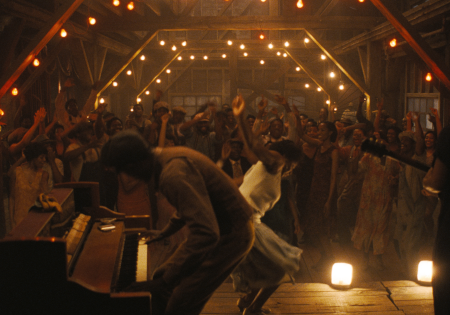
There isn't much to say that hasn't already been said about Ryan Coogler's Sinners, a rare box-office smash and critical darling that excited us all with its thematically rich script and unforgettable musical numbers. Starring Michael B. Jordan in dual roles as twin brothers who return to their hometown to open up a juke joint, the movie works not only as a supernatural thrill ride, but as a clever exploration of the historical intermingling of different cultures and the resulting influence on their musical traditions.
Ludwig Göransson's ambitious score is punctuated by the movie's bravura sequence, where a young blues musician starts a simple version of a song called "I Lied to You," only to conjure ancestors and musical spirits across history, blending West African rhythms, blues, jazz, hip-hop, and rock and roll into one transcendental moment where time has no meaning, and everyone in the crowd (and in the movie's audience) has surrendered completely to the power of music. It's just one of a few memorable scenes in a movie that will surely stand the test of time and hopefully serve as an example to the Hollywood studios that big-budget blockbusters don't have to aim at the lowest common denominator to achieve box office success; just give time and space to talented creatives and let them swing for the fences.
#10
If I Had Legs I'd Kick You
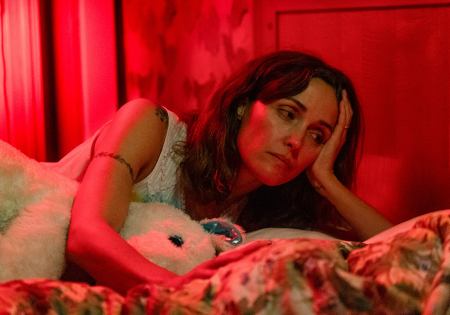
Writer/director Mary Bronstein’s If I Had Legs I’d Kick You is a profoundly tense and extremely uncomfortable tour of a few days in the life of a woman who is well beyond her limits, overburdened and without support, who ultimately just lets go. The movie asks a lot of an audience, not only in spending their free time away from real-life anxieties by watching fictional anxieties, but in continuing to empathize with a woman who is easy to relate with at first, until she starts doing a bunch of really bad things.
It almost plays out like a horror movie, giving life to those incredibly dark jokes that parents might make to each other when their kids are being particularly difficult. It's an experience that's emotionally resonant and physically exhausting, a bold vision masterfully realized, another in that special category of movies that you can't help but admire even if you'll probably never see it more than once.
Read the full review of If I Had Legs I'd Kick You on The Filmologist.
#9
On Becoming a Guinea Fowl
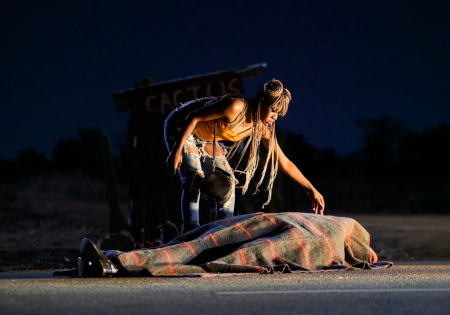
Rungano Nyoni's On Becoming a Guinea Fowl is a worthy entry into the great and terrible pantheon of movies that make you so angry that you're not sure you'll ever want to watch them again. This is very much meant as a compliment and an endorsement. Described generously in capsule summaries as a "dark comedy," it's much more of an intense emotional drama about sexual abuse and the pent-up rage that a Zambian family struggles to repress in an effort to hide their collective shame. There are also generational and cultural influences at play, all masterfully combining to make for a captivating yet uncomfortable viewing experience.
It's a bold piece of work that dares to angrily defy tradition, and sparks hope that the younger and future generations will sound the alarm and bring about change. Our elders and their traditions can be respected and their experiences met with empathy, but things need to move forward; they simply cannot be allowed to go on in this manner. This movie will leave people angry, sure, but hopefully it will also further encourage them to speak up, even against their own families, when these kinds of injustices are going unpunished.
Read the full review of On Becoming a Guinea Fowl on The Filmologist.
#8
The Testament of Ann Lee
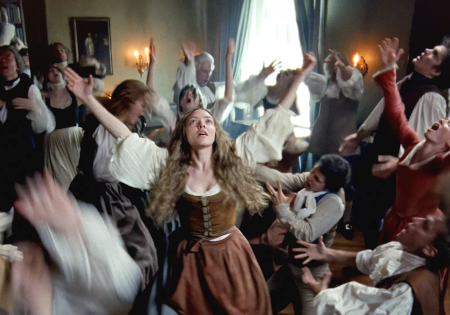
At its core, The Testament of Ann Lee is a fairly standard biopic about the life of Ann Lee, the founding leader of the Shakers religious sect in the 18th century. This in itself is pretty interesting; the sect's founder Ann Lee (played with total commitment from Amanda Seyfried) leads a growing group of committed followers who are seen as either religious radicals or a loud nuisance in England and eventually moves to America in the hopes of converting early settlers to their simple way of life.
The Shakers are mostly known for their worshipers turning their religious and personal feelings into a frenzy of spastic convulsions and guttural singing and dancing, and the movie captures these moments in a way unlike anything you've ever seen before. Composer Daniel Blumberg draws from original Shaker hymns to create several extended musical numbers that feature immaculately choreographed dancing and singing/chanting, resulting in something akin to an extraordinary out-of-body experience, all at once beautiful, disturbing, mystical, profound, sorrowful, funny, and completely magical. It's a totally singular vision from director Mona Fastvold and co-writer Brady Corbet (the husband/wife duo responsible for last year's The Brutalist), and an ambitious swing that will compel and repel viewers in equal measure.
#7
Marty Supreme
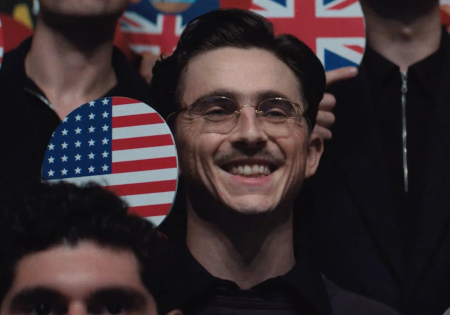
Timothée Chalamet is a very famous and extremely talented actor who has made it no secret that he wants to be remembered as one of the best to ever do it. You can see the desire in just about every role he’s taken in the past few years. Bob Dylan in A Complete Unknown, a man driven to change the face of music. Paul Atreides in the Dune franchise, a man who becomes the literal messiah. Willy Wonka in Wonka, a man looking to become the greatest chocolatier in the world. This pairing of actor and role, both compulsively driven towards a singular goal, has imbued Chalamet’s performances with an easy naturalism and a kind of electric desperation.
It’s this kind of energy that makes him the perfect choice to star in Marty Supreme, the latest from Josh Safdie, a director renowned for movies (like Uncut Gems) that feature characters going after a goal with the reckless propulsion of a runaway truck hurtling brakeless down the side of a mountain. Chalamet plays a character imbued with the unwavering confidence of someone who thinks he’s the best ping pong player in the world, and anyone in his orbit – friends, family, and lovers alike – are all just tools to be used to get him where he wants to go. It's a breathtaking thrill ride about the classic American Dream turned up all the way up to 200%.
#6
Hamnet
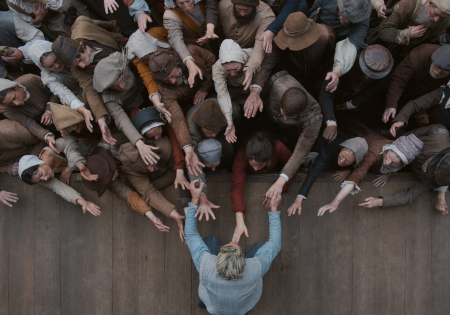
After her brief and divisive detour into the Marvel Cinematic Universe, Chloé Zhao bounces back to the kind of form that won her an Academy Award for both Best Picture and Best Director back in 2020 for Nomadland. Hamnet, based on the novel of the same title by Maggie O'Farrell, is a dramatization of the marriage between Agnes Hathaway (a never-better Jessie Buckley) and William Shakespeare (Paul Mescal), and cleverly recontextualizes the events in the classic play Hamlet through the lens of the couple dealing with the real-life tragic death of their 11-year-old son. It's a rich and lushly rendered historical drama that has instantly become a conversation piece thanks to a spectacularly devastating ending that has left the vast majority of audiences in a puddle of tears (myself definitely included).
Some may have quibbles with a trauma-centric first half that seems almost too sad to be believed and others may see the ending as emotionally manipulative, but there is no denying the awesome power of those final 20 minutes. If evoking that kind of powerful emotional response was so easy, then every movie would do it. For me, it's profound effectiveness renders any complaint of manipulation meaningless. It's a fascinating thing to see this in a theater and sob along with a crowd – a woman in an AMC ad once said, "heartbreak feels good in a place like this," and you can imagine she was talking about a movie exactly like Hamnet.
#5
Eddington
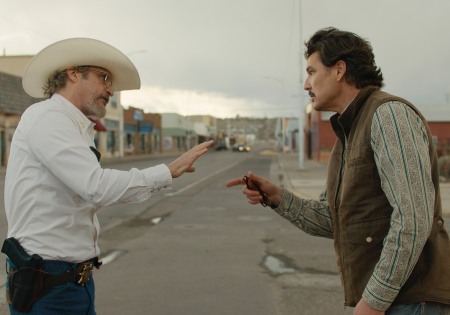
Ari Aster's Eddington is a hilarious and terrifying exploration of what happens when the different information bubbles we all live in start to collide with each other, set in the days of early COVID when this kind of societal polarization seemed to pass a point of no return. It's a movie designed to provoke, not just because it skewers both "sides," but because it shines an ugly light on how susceptible we are (yes, ALL of us) to a machine that doesn't seem like it can ever be stopped, one that has us trapped in a never-ending torrent of data that has completely taken over how we relate to our fellow human beings.
The online discourse about this movie was, of course, swift, fever pitched, and appropriately divided. Aster probably wouldn't want it any other way.
#4
Sentimental Value
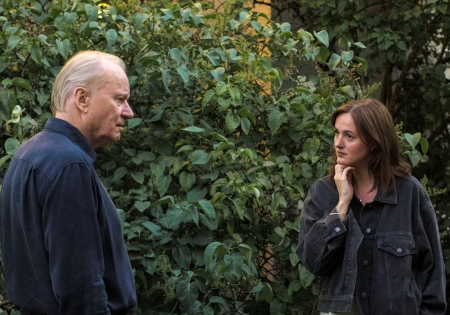
Joachim Trier's Sentimental Value starts with the story of a house, built in Norwegian sunshine before the World Wars, and home to many generations of the Borg family all the way up to the present day. A poetic voiceover asks if the house is like another member of the family, happier when more people are inside its walls, sadder when its inhabitants leave and never come back. We get glimpses of various Borg family members living in the house throughout time, looking out windows, stomping on floors, filling its rooms with life. But we also see a crack in its foundation, small at first, but increasingly long and jagged as time goes by.
Trier's latest — and his first since the Oscar-nominated The Worst Person in the World in 2021 — is his finest work to date, an often funny and tender tale about a family that knows it's in trouble but doesn't know how to help each other escape. The show-stopping final scene is one of the best in recent memory, expertly using a movie-within-movie conceit to produce a moment that will take viewers through the full range of available emotions. It's the perfect showcase of the transformative power of art and a hopeful story that suggests it's never too late to find a way to communicate with someone you love.
Read the full review of Sentimental Value on The Filmologist.
#3
It Was Just An Accident
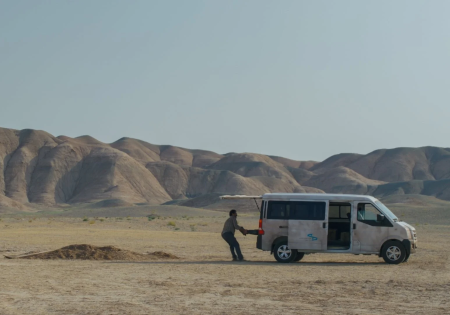
Iranian director Jafar Panahi has made a career out of creating films that speak out against the injustices perpetrated by the Iranian government, which has led to his arrest on multiple occasions for unspecified "crimes against the regime" and a 20-year ban from making or directing any movies. He has spoken to numerous Iranians who have been detained and fortunately released, and he has survived his own spell in solitary confinement, with nothing more than sounds to help create a mental image of what his captors must be like.
It's these experiences that have directly influenced It Was Just an Accident, Panahi's gripping exploration of the feelings of justice and revenge that swirl around in the minds of those attempting to carry on with their lives after a traumatic experience at the hands of an oppressor. Unlike Panahi's more covertly filmed, winking metafictional classics like Taxi and This Is Not a Film, his latest work is a meticulously scripted drama, still made in secret to avoid government interference, but working in a more traditional filmic manner. It's perhaps Panahi's most accessible work to date, even as it still carries the same fire and urgency of his earlier grassroots efforts. This is anti-authoritarian filmmaking at its very best.
Read the full review of It Was Just An Accident on The Filmologist.
#2
One Battle After Another
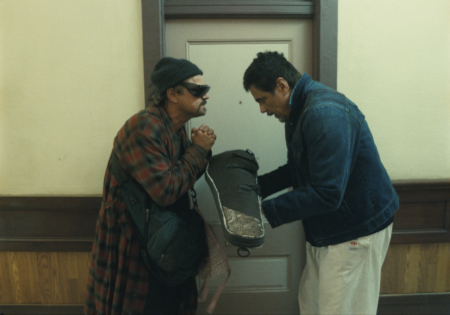
If Thomas Pynchon's 1990 novel (on which this movie is based) is about "what America has been doing to itself, to its children, all these many years," then writer/director Paul Thomas Anderson has successfully captured that same spirit and transported it to the all-too-familiar modern world, where many fights have been lost, but the same never-ending war is still up for grabs. It's a fist-pumping battle cry, a motivating call to dust ourselves off and never stop getting a second wind, a hopeful reminder of the power of our shared humanity, all wrapped in an action-packed $130 million production featuring one of Hollywood's biggest stars and made by one of the industry's biggest auteurs.
And the best part is that it's all incredibly fun, a prime example of what more studios should be doing with their bigger-budget projects. Then again, not all directors are Paul Thomas Anderson, capable of making a movie of the current moment that doesn't feel ridiculous, providing moments of real human feeling amongst eye-widening action, all wrapped up in what can only be described as hope. The battles are never going to stop coming. This is a movie that reminds us why we need to keep fighting.
Read the full review of One Battle After Another on The Filmologist.
#1
Train Dreams
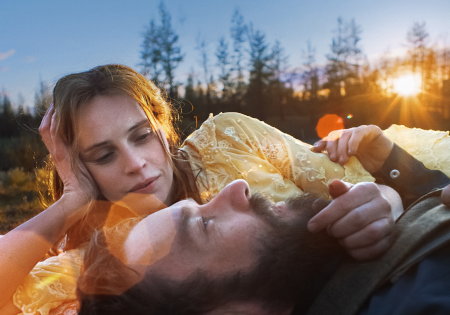
Clint Bentley's Train Dreams is the story of a regular man just trying to get by in early 20th century Idaho, wanting nothing more than a quiet life on a little bit of land with his wife and child. Even though he doesn't ask for much, he goes through great struggles to get it, and even more hardship to try and keep it. It's a story of nothing more than life and death, the same story that countless lives have lived throughout history, unremembered and unremarked upon, but each beautiful in its own way. It's the kind of movie that makes you feel connected to everyone and everything; the kind of art that lets you glimpse the greater picture of humanity and see how your own small thread is part of a larger, grand tapestry that lasts forever.
It's a lovely experience, increasingly rare in today's cinematic environment, to feel so swept away by something as small as the portrayal of an individual life, lived simply. “It’s beautiful,” a man says in the movie as he recalls the totality of his life. “All of it. Every bit of it.”