
Chronovisor
Release Year: 2026
Directed by: Jack Auen and Kevin Walker
Cast:
Anne Laure Sellier
Chronovisor
Chronovisor Finds Adventure in the Archives

By: Marc Kozak
There’s something deeply romantic about stories in which long-buried histories are brought to light. Historical mysteries like The Da Vinci Code or The Name of the Rose are timelessly thrilling because they speak to our desire to uncover some carefully concealed truth. How exciting it is to picture yourself as the one to expose and overcome some kind of ancient plot or mysterious cabal whose existence is dedicated to suppressing a discovery or device that could change the course of the planet. The best examples of these stories use a solid foundation of actual history to trigger or even trick our imaginations into thinking that these kinds of miraculous and wondrous discoveries might really be out there, if we just looked hard enough or happened across the right sequence of clues. There’s an Indiana Jones in all of us.
Kevin Walker and Jack Auen’s film Chronovisor is a very literary version of this kind of adventure story, particularly in how it conjures that delightful feeling of being completely absorbed by a great book into the late hours of the night. It’s especially remarkable that the movie is able to grab you so completely despite being incredibly anti-cinematic, as it consists almost entirely of quiet scenes in which the only character in the movie sits around and reads old books, magazines, and newspaper articles in a series of dark libraries. That might not sound like the most riveting way to present a story, but prepare yourself to be surprised. Chronovisor is both an addicting conspiracy thriller and a love letter to research, presented in a uniquely effective way that allows the documents and artifacts themselves to tell the bulk of the story.
The first few scenes are admittedly (but deceptively) dry, introducing us to Béatrice (Anne-Laure Sellier), an extremely serious academic at Columbia University’s Zuckerman Institute in New York — the world's foremost neuroscience organization. She starts the movie off with a lengthy monologue about the physical nature of memory, lecturing a small group of only somewhat interested colleagues about how different parts of the brain are responsible for storing and recalling our various recollections. Her life appears to be dedicated entirely to learning, an almost monkish existence in which she does little else but pore over various texts and journals inside of a tiny, book-filled apartment. At some point in her studies, she comes across a passing reference to Father Pellegrino Ernetti, an Italian Benedictine monk who claimed to have invented a device that could capture residual radiation and sound waves from the past and translate them into a visual representation of any moment in history. This device, the Chronovisor, was essentially a time machine, allowing its user to see something akin to a home video of important events throughout time.
" It's both an addicting conspiracy thriller and a love letter to research, presented in a uniquely effective way that allows the documents and artifacts themselves to tell the bulk of the story. "
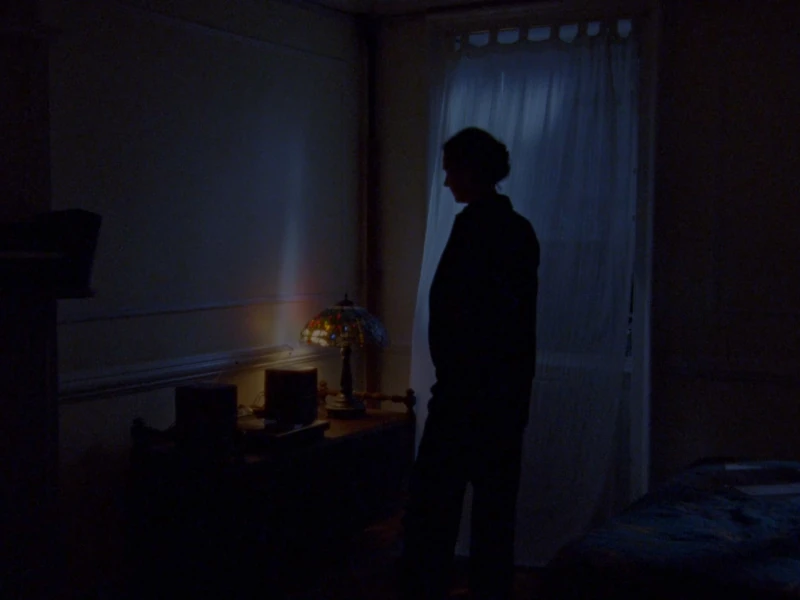
Béatrice starts diving down the Chronovisor rabbit hole pretty quickly (as you might imagine) and starts the laborious process of uncovering snippets of information hidden away in dusty books and library microfilm. She discovers that Ernetti worked in some capacity with a small group of well-known scientists to build the device, including famous physicist Enrico Fermi and former Nazi scientist Wernher von Braun. Eventually, the Vatican gets involved (as it tends to do in all of these kinds of stories) and commissions Ernetti to show them a firsthand account of the crucifixion of Jesus Christ. There are a few instances of recorded skepticism in the press, but for the most part, the rare few who provided a firsthand account after viewing the Chronovisor seem to genuinely believe the images that it shows them. From there, things start to turn into a genuine conspiracy. Ernetti goes missing for more than a decade, and all traces of stories that mention the Chronovisor start to disappear or become dismissed as a hoax.
It all sounds pretty sci-fi, but believe it or not, the entire movie is based on the very real story of Father Ernetti and the Chronovisor. After researching the topic for nearly a year, Walker and Auen found themselves becoming the world’s foremost experts in Ernetti’s life, recovering considerable piles of VHS tapes, cassettes, photographs, and various printed materials that seem to piece together a legitimate case for the existence of the Chronovisor. Most of the archival elements that appear in the movie are genuine, giving the story an almost-supernatural sense of believability. You can easily understand Béatrice’s (and the filmmakers’) growing obsession with the material; we’ve all fallen into a similar information well before.
Béatrice’s research in the film, however, is refreshingly old-school, confined to tactile sources with nary a web browser in sight. Much of what we see on screen is simply images of text, as Béatrice haunts various beautiful East Coast libraries late into the night. Since most of the written sources are in German or Italian, the movie uses a neat trick of superimposing a highlighted English translation over selected sentences. By drawing our attention to only a few words or sentences at a time – and having the translations disappear right on the edge of the amount of time it takes a reasonable person to read them – Walker and Auen deftly control the precise information given to the viewer, creating a seamless (and quite frankly enthralling) stream of story that flows nicely from one scene to the next.
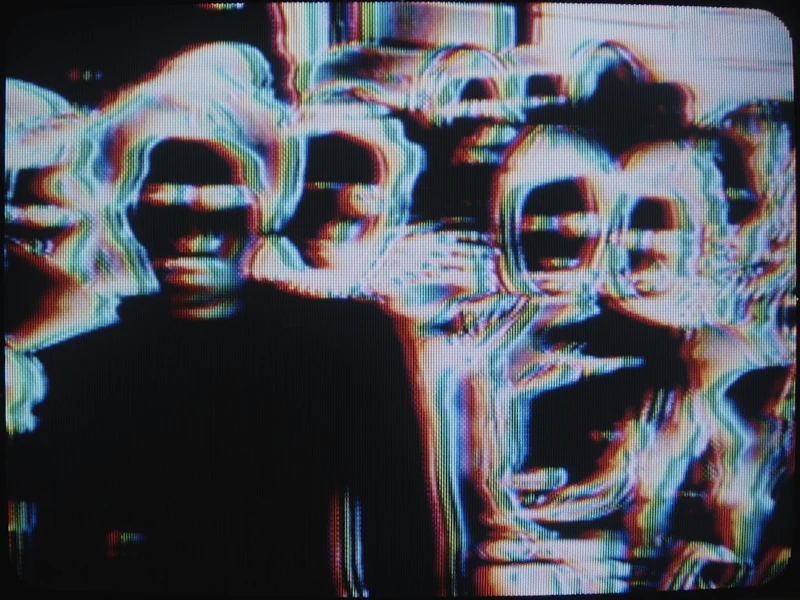
As in any good historical mystery, the more Béatrice learns, the more danger she appears to put herself in. She reaches out to any publisher or academic source that might know anything about anyone left alive who had a connection to Ernetti. As she starts to get more desperate, she lies and says she’s hoping to get in contact with a living relative so her organization can give Ernetti a posthumous award. The camera frequently gets right in her face, often only showcasing her increasingly furrowed eyes as she starts to shift from academic researcher to full-on conspiracy believer. She jumps with nervous excitement each time the phone rings or a mysterious package arrives, the mood growing increasingly ominous as pieces start to fall into place.
Instead of trying to find a trained actress who could not only speak in multiple languages but also sound credible when communicating matters of the brain, Walker and Auen cast Anne-Laure Sellier, the Cartier-Chaired Professor of Behavioral Sciences at HEC Paris. Her real-life expertise lends a great deal of credibility to the character of Béatrice. Even though she rarely interacts with other people, her demeanor and facial expressions effectively carry much of the movie’s emotional weight, as she expertly communicates the deterioration of her professional and personal life as she becomes consumed by her exhaustive search for answers. What actor could convey the emotional rigors and physical tolls of intensive research better than someone who has repeatedly done it themselves? Sellier was an inspired choice for the role, and her performance elevates the material in ways that no professional actor could.
Of special note is the usage of a sumptuous classical score from English composer Gustav Holst, which often makes scenes of a lone woman sitting and reading a book feel as huge and tense as anything in a blockbuster action movie. Much of the music comes from Holst’s orchestral suite “The Planets (1914-17),” which contains many appropriate moments of pensiveness, adventure and dread. There is also the effective inclusion of some haunting Gregorian chants that were written by Father Ernetti himself, who is more renowned in the real world for his musical work rather than for his Chronovisor. The usage of these early 20th-century pieces of music does a lot to enhance the grandeur and mystery of Béatrice’s search.
It’s quite extraordinary that a micro-budget indie movie from first-time directors that has hardly any action or characters could be so utterly gripping, but credit to Walker and Auen for making so much out of so little. If you enjoy getting sucked into a good historical conspiracy like the ones that inspired the books of Jorge Luis Borges and Umberto Eco, do yourself a favor and give Chronovisor a chance.